Europe by Physics and Train

This post is now also on The Guardian. See also Chapter 3.5 of Smashing Physics.

Back in Geneva after the SUSY meeting in Bonn and a day in the mountains.

In the mountains

One of us is not talking physics

The return journey wasn’t as pleasant as the outward one. The train didn’t turn up at Bonn Hauptbahnhof so we were taxied across town. This meant a 30min delay and I missed both the next connections. However, via Mannheim, Basel and Bern, I made it in the end*.

The SUSY meeting made it on to German TV in a report starring Herbi Dreiner but briefly featuring me listening to my own talk, thanks to some nifty editing**. As far as I can tell with my poor German language skills the report looks fun & informative – good when physics is news. Herbi is a bit of a “science in public” star anyway, having won the European Physical Society prize last year for his physics show, something I hope he gets to perform in the UK soon.

Continue reading →

Posted in Particle Physics, Physics, Science, Travel | Tagged , , | Comments Off on Europe by Physics and Train

Supersymmetry: The Higgs boson’s flexible friend

This post is also on The Guardian. See also Chapter 3.5 of Smashing Physics.

Next week I am giving a talk a the SUSY 2010 conference in Bonn.

It is a bit weird that there have been seventeen of these annual SUSY (for “SUperSYmmetry”), meetings, even though there is as yet no experimental evidence for SUSY. Perhaps it’s excusable. SUSY is still the best way I’m aware of to improve the Standard Model of particle physics.

To me the three biggest arguments in its favour are: One, it plugs an important hole in the theory. Two, it sort-of-predicts Dark Matter. Three, it looks nice.

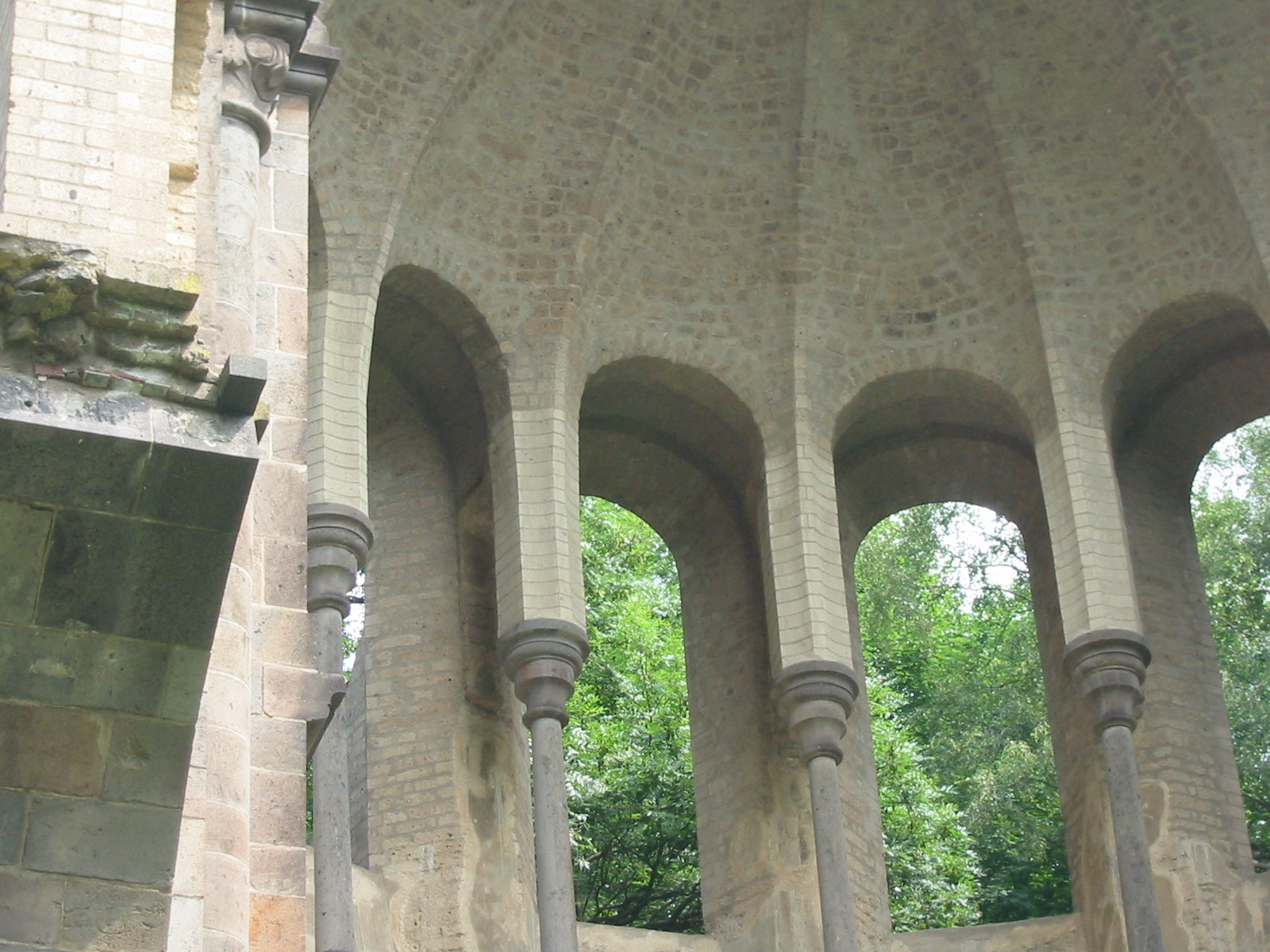
Something looking nice in Bonn.

The first is to do with why the Higgs boson is not millions of times heavier than it is. Given we don’t know whether there is a Higgs yet, that’s a pretty forward-looking concern, but it is a real worry for the credibility of the theory. Basically without it, the Standard Model looks like a coincidence on the level of one in ten-thousand-million-million (1016). This is 100 times less likely than winning the lottery jackpot two weeks running if you buy a single ticket each week. SUSY introduces some quantum cancellations which make the Higgs mass much more stable, and therefore plausible. Still, maybe the universe got lucky. Some string theorists might say we should be glad it’s not one in 10500.

The second is the most compelling to me, since astronomical observations tell us there is probably some Dark Matter out there (or else we really do not understand gravity) and many SUSY models predict a particle which would be an ideal candidate for Dark Matter. It may be right behind you. When two different branches of science have problems which seem to converge on the same solution, look out for progress.

The third point is arguable and I may argue it later, but not now.

Another feature of SUSY is its flexibility. It can appear in many different guises in an experiment, to the extent that almost any weird event we see could (and will, I bet you) be interpreted as a “hint of SUSY”.

Continue reading →

Posted in Particle Physics, Physics, Science, Travel | Tagged , , , , , | 9 Comments

Discover Your Paper’s Other Side

Good to see that an STFC employee has come up with some money-saving ideas in response to the government’s appeal.

I’m not qualified to comment on the salary freeze. The point about end-of-year flexibility is so obviously true it is incredible it has been ignored for decades. And whoever wrote it is dead right on the Research Council UK “Shared Services Centre” (SSC).

Anyone who reads my tweets will know that I am not a fan of the  SSC. It looks like an expensive, pointless reorganisation of the kind which seems to appeal to politicians and administrators once they get a certain distance from whatever they are administering. It is supposed to “streamline” and “centralise” procurement and stuff. Yeah, right.

Continue reading →

Posted in Politics, Science Policy | Tagged | 1 Comment

Into the unknown

See also Chapter 3.8 of Smashing Physics.

This morning the first LHC paper to really probe for new physics was submitted by ATLAS to the preprint server and to Physical Review Letters.

There has already been one paper (by CMS) on minimum bias results in 7 TeV collisions, which was the first paper from the highest energy collisions ever seen. (For more on minimum bias see here and here). There are also numerous preliminary results from all the LHC experiments. However, this ATLAS paper is the first to be sent for publication which contains results from the highest energy quark and gluon collisions ever. As I explained here, this is really where one becomes sensitive to physics beyond the Standard Model of particle physics.

What we have done in this paper is set exclusion limits. This means we didn’t see anything unexpected, but we have pushed the boundaries of our knowledge of fundamental physics up a notch in energy. We are really exploring new ground now. More data are still coming in, the measurements are still getting more precise. Another major milestone in the campaign…

Also, four pages of physics, 15 pages of authors and acknowledgments! Imagine if this paper had shattered the Standard Model, or found the Higgs – You see the problem with Nobel prizes? They even missed out Cabibbo for goodness sake!

Share

Posted in Particle Physics, Physics, Science | Tagged , , , | 2 Comments